Hair Care That’s Actually Self‑Care: A Guide to Naturcolor’s Botanical Ingredients
Naturcolor was built around a simple idea: a gentler ingredient list can still deliver real color. This guide breaks down every botanical in the formula, from chamomile and coconut oil to bilberry and gotu kola, and shows how each one addresses a specific concern, whether that's a stinging scalp, dry strands, or color that looks flat. If you've ever wondered what's actually in our hair color and why, this is where to start.
Self‑care doesn’t have to mean adding another step to your routine - it can mean simply choosing products that don’t ask your body to “tough it out.” For many people, conventional permanent color comes with familiar tradeoffs: a stinging scalp, dry or brittle hair, harsh fumes, or that lingering feeling of “this can’t be good for me.”
Naturcolor was created to change that experience. It uses the lowest chemical content possible for a permanent hair color, set in a base of botanicals and oils chosen to comfort the scalp and protect the hair while your color processes. And you can see that reflected in the ingredients list: it’s ordered by concentration, and you have to read surprisingly far down before you reach anything that isn’t botanical or naturally derived.
Below is a clear guide to what those ingredients are doing. First, an ingredient-by-ingredient breakdown, then the same information organized by common hair and scalp concerns, so you can see how one formula was designed to be gentler, more supportive, and truly worthy of the name self‑care.
The Botanicals
Burdock root extract is rich in inulin, tannins, and phytosterols, along with iron, zinc, magnesium, and vitamins B and C. Burdock has a long history in scalp care, so has been used to calm irritation and support the skin that hair grows from.
Gotu kola oil and extract contain triterpenoid compounds that have been studied for their role in collagen production and skin repair. They're working to maintain a healthy and balanced scalp.
Nettle extract carries an unusually dense mineral load, including silica, which is a building block of the hair fiber itself, along with iron and vitamins A and C. This is why nettle hair rinses were a folk remedy for strong, glossy hair long before modern hair care existed.
Sage extract contains rosmarinic and carnosic acid, two well-studied plant antioxidants with antimicrobial properties, and it has traditionally been used to help balance an oily or flaky scalp.
Hops extract, the same flower used in beer brewing, contains polyphenols with antimicrobial and root-strengthening properties. It's part of why this formula smells like plants instead of a lab.
Chamomile extract earns its calming reputation at the compound level, through bisabolol and apigenin, both well documented for their ability to help soothe reactive skin. If a conventional dye has ever left your hairline itchy, chamomile is included here to help avoid that.
Lavender extract and oil contain linalool and linalyl acetate, the compounds behind lavender's scent. These compounds have documented calming effects on skin, helping to soothe and condition at the same time.
Bilberry extract is one of the richest plant sources of anthocyanins, which is among the most potent antioxidants found in nature. Since color chemistry can put oxidative stress on the hair fiber, antioxidants like these assist in minimizing that unwanted stress.
Coconut oil is the most researched ingredient on this list, and for good reason. A widely cited study comparing coconut, mineral, and sunflower oil found it was the only one of the three that measurably reduced protein loss from hair. The reason is lauric acid, which uses a small, straight-chain structure that lets it get into the hair shaft, when other oils just sit on the surface.
Soy oil and lecithin have fatty acids, vitamin E, and phospholipids that condition the hair and help restore its protective barrier, which is a large part of why "soft after coloring" is a comment that shows up in our customer reviews quite often.
Shea butter and oleic acid are emollients that smooth the cuticle back down as the process finishes and helps to seal moisture in. A closed, smooth cuticle is what produces a naturally healthy shine in the hair.
Rosemary, walnut, red sorrel, and jasmine round out the list, each adding its own conditioning or antioxidant support.
Common Hair-Color Concerns And How Naturcolor Addresses Them
A transparent ingredient list is a good start, but the real test is how hair color treats your scalp and hair. If you’ve dealt with stinging, dryness, flat-looking results, or other hair-color issues before, the sections below are organized by common concerns. They walk through how Naturcolor is formulated to help, so you can understand why it tends to feel gentler and kinder to your body.
1. If your scalp used to sting or flake after coloring
This is the largest group of ingredients in the formula, built around chamomile, lavender, burdock, and gotu kola. An itchy hairline after using a conventional dye usually means your skin is reacting to harsh alkalines or a high-strength developer.
Naturcolor has no ammonia and holds peroxide to a low concentration of 3%, so the calming botanicals help make an already mild coloring process seem even more gentle. Chamomile and lavender help to settle reactive skin, burdock tends to the area around the follicle, and gotu kola supports your scalp.
2. If your hair feels dry or brittle from coloring
Dryness after coloring usually means protein and moisture are leaving the strand through a cuticle that got forced open and never properly closed back up. That's where coconut oil, shea butter, oleic acid, and soy oil are useful.
Coconut oil handles the first half, since it's the oil shown in published research to get into the hair shaft and reduce protein loss, while shea butter and oleic acid handle the second, smoothing the cuticle flat so moisture stays where it belongs.
For those who've struggled with a straw-like texture in their hair after coloring with other brands, this combination is what often leads to softer hair with Naturcolor.
3. If your color has always looked flat and one-dimensional
Naturcolor uses fine Italian pigments, hand-blended in small batches, which deposit with a subtly transparent effect that keeps the natural variation in your hair. When covering gray hair, the grays will take the color a bit differently giving the appearance of soft highlights within the finished shade.
Bilberry and sage do their work during processing, where their antioxidants help to offset the oxidative stress that leaves over-processed hair looking dull. The benefit is depth on coloring day and protection while the color develops.
4. If your hair is fine or feels fragile
Fine hair asks more of a formula because there's less fiber to work with, which is where nettle, gotu kola, and hops matter most. Nettle contains silica and minerals which support structural protein synthesis and enhance the hair’s tensile strength. Gotu kola's triterpenoids have been studied for their ability to support the collagen-rich skin that the hair follicle sits in. Hops brings polyphenols with a long history in root care.
This isn't a miracle claim, but a formula that treats fragile hair as something to reinforce, not just something to color.
5. If an oily or flaky scalp flares up between colorings
Sage, hops, and rosemary matter most here, since sage's rosmarinic and carnosic acids and hops' polyphenols both help balance the scalp, and rosemary carries centuries of the same reputation.
A coloring session shouldn't leave your scalp out of balance for a week afterward.
6. If the smell is what you dread most
Lavender and hops help here, along with one important absence. This absence matters more than any addition: there's no ammonia in Naturcolor, so there are no fumes and no reason to hold your breath in your own bathroom for 45 minutes.
What you smell instead is the formula itself: herbal and mild, with lavender, hops and other botanicals. Customers mention the scent in reviews almost as often as the color.
7. If you're done putting things on your body that you don't understand
Then here's what matters most: every ingredient above is in the formula at a working amount, doing a job you can now name.
Permanent color can't be made from plants alone, and we won't pretend otherwise. But every piece of chemistry that remains is held to the lowest amount that still works, alongside numerous natural ingredients that look after your hair while the color takes.
One thing we'll always say plainly: whatever formula you use, ours included, always be safe and do a skin patch test 24 hours before coloring.
Questions About an Ingredient or a Shade?
If anything here raises a question about your specific hair or which shade to choose, you don't have to figure it out alone.
Take the 2-minute shade quiz, or call our color specialists at 800-784-8212, Monday to Friday, 8am to 5pm PST. A real person answers, and they'll talk through your questions and concerns before you buy anything.

NATURCOLOR BOTANICAL-BASED HAIR COLORS
Experience the gentle difference. Our ammonia-free, botanical-based formula delivers vibrant, permanent color and guaranteed gray coverage while nourishing your hair for a healthy, radiant shine.
Browse all colorsSafer Beauty & Personal Care
view all
100% Coverage Is Easy. Not Wrecking Your Hair To Get There Isn't.
Full coverage isn't the hard part, and it never was. Traditional dyes force the cuticle open to get pigment in fast, ...
read more
The 11 Best Ways to Make Gray Hair Coverage Last Longer
Great gray coverage can fade fast... but it doesn't have to. From your shampoo choice and wash frequency to heat, sun...
read more
Why Your Gray Coverage Didn't Work (And How to Fix It)
Gray hair is more resistant than you think—and that's why even careful coloring sometimes falls short. Discover the t...
read more
Five Botanicals To Rejuvenate Your Hair
Nature has been nourishing hair for centuries; and it still works. Meet five powerful botanicals, from aloe vera and ...
read more
Hair Color That Works for Your Healthy Lifestyle
Conventional hair dye and a healthy lifestyle don't mix well. Naturcolor's botanical-based formulas, crafted from cen...
read more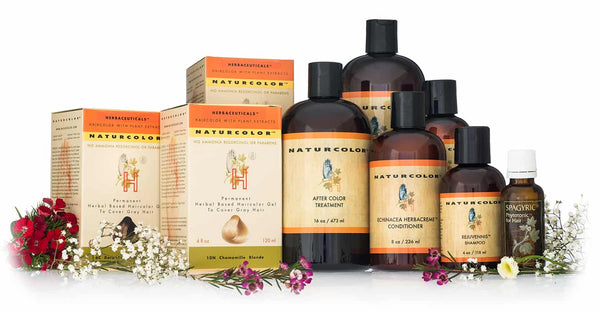
Meet Naturcolor: Herbal-Based Hair Color Gel Handmade to the Highest Standards
Since the 1980s, Naturcolor has handcrafted small-batch, botanical-based hair color from the finest Italian pigments....
read more

Ready for Hair that Looks Born, Not Bottled?
“This is a quality brand of hair color. It is gentle and easy to use. Doesn't contain the harsh chemicals of well known retail brands... No harsh smell.... very natural looking, not stark and fake like other brands that I've used. I even mix colors for a better color result. Leaves hair soft, not stiff. ”
 Barrett,
Verified Buyer
Barrett,
Verified Buyer
 Barrett,
Verified Buyer
Barrett,
Verified Buyer
No resorcinol or ammonia
Beautiful, natural-looking color guaranteed
Easy to maintain so you always look your best

