Is There a Difference Between Home Hair Color and Salon Color?
Many people assume salon color is always the superior choice, but the real answer is more nuanced. This post explores the differences between salon and at-home hair color, where professional services still hold an edge, and where the gap has narrowed more than most people realize. Whether you color at home, visit a salon, or do a little of both, understanding what drives great results can help you make a more confident choice for your hair.
This question comes up a lot, and it’s usually shaped by years of hearing some version of the same story: that salon color is the professional standard, and everything else is a compromise. If you want the best results, the thinking goes, you need to be in a chair.
Is that really true? And if it ever was, does it still hold today?
The landscape of hair color has shifted considerably in recent years, and some of the assumptions that once felt settled are worth revisiting. The honest answer is that the distinction between salon vs. home hair color is more complicated, and more interesting, than the conventional wisdom suggests. This article isn't here to declare a winner but to explore what actually separates the two, where they've started to converge, and how to think about which path makes sense for you.
What Typically Separates the Two
There are real differences between getting your hair colored in a salon and doing it at home, and it's worth understanding them clearly before forming any opinions about which is better.
Who applies the color. In a salon, a trained colorist assesses your hair in person, selects a formula, and applies it with precision built from experience. At home, you're doing all of that yourself. For simple, single-process color or gray coverage, this is a manageable task for most people. For more complex work like balayage, corrective color, or significant lightening, the skill gap matters more.
The level of customization. A colorist can mix, modify, and adjust a formula on the spot based on what they're seeing. They can account for how your hair has processed in the past, spot variations in texture or porosity across different sections, and course-correct in real time. At-home color products are designed to work well for a wide range of hair types, but they're working from general guidelines rather than an individualized read of your specific hair.
Cost and convenience. Salon visits represent a meaningful investment, both financially and in terms of scheduling. At-home color works on your timeline, in your space, and at a fraction of the price per application. For people maintaining regular gray coverage or refreshing an existing color, the economics of at-home color are hard to argue with.
None of these factors automatically make one approach "right." They're simply the terrain. Understanding them is the starting point for making the best decision between salon vs. home hair color.
Where Home Hair Color Has Evolved
If you've been operating on assumptions formed a decade or two ago, it's worth a fresh look because at-home hair color has changed considerably.
The early reputation of home color products was influenced by an era of high-chemical formulas and limited shade options. Results could be unpredictable. Coverage on gray was hit or miss. The experience wasn't always pleasant, and the outcome wasn't always what the box suggested. This is no longer a fair description of the full market because several things have shifted.
Ingredient quality has improved. A new generation of botanically-based and low-chemical formulas has emerged, built around superior pigment quality rather than brute-force chemistry. Because these formulas use higher-grade pigments, they can achieve effective results with lower peroxide concentrations, less ammonia, and fewer harsh additives. The trade-off that once defined home color (you can have convenience or you can have quality, but not both) is no longer a given.
Gray coverage has become more reliable. Gray hair is structurally different from pigmented hair. It's more resistant, has a tighter cuticle, and requires pigment formulated specifically to penetrate and deposit rather than just coat the surface. Modern gray-coverage formulations, particularly those designed around pigment concentration rather than chemical strength, have made meaningful advancements on this front.
The experience has become more user-friendly. Better systems and product consistency for ease of application, and more intuitive guidance have made at-home color more accessible to people who might have found the process intimidating in the past. Color finder tools, detailed how-to resources, and in some cases direct customer support have helped close the knowledge gap that once made professional guidance feel like a necessity for even basic results. For someone new to coloring their hair at home, the learning curve is much more manageable than it used to be.
None of this is to say at-home color has become equivalent to salon work in every situation. It hasn't. But the gap has narrowed in ways that matter.
Where Salon Color Still Offers Advantages
Professional color services offer genuine benefits that are worth acknowledging directly, not minimizing.
An in-person assessment changes what's possible. An experienced colorist can see things about your hair that you may not be equipped to evaluate on your own: how it's processed in the past, where it carries damage, how different sections are likely to respond to the pigment. That assessment informs every decision that follows, and it's hard to replicate at home.
Custom mixing opens up options. Salons blend formulas to a level of specificity that pre-packaged products can't match. If you're after a very particular shade, or if your hair has a complex color history, that ability to dial in a custom result is a real advantage.
This is one area, though, where the gap between salon and home has quietly narrowed for some products. Most boxed color is a single, fixed formula with no room to adjust. You pick the shade on the box and work with what's inside. But not all at-home color works that way. Some products, Naturcolor among them, are specifically designed so they can be blended, allowing users to mix shades together or combine a primary color with a secondary tone to arrive at a uniquely personalized shade. The mechanics are similar to what a colorist does at the chair, scaled for home use: start with a base, adjust the tone, and tailor the result to your hair.
This matters most for people whose ideal color falls between two standard shades, or who need to neutralize a particular undertone without going darker or lighter overall. It also gives people who’ve been coloring their own hair for a while a way to build on what they've learned over time, refining their formula as they get a better read on how their hair processes color. That kind of iterative customization has traditionally been one of the clearest reasons to go to a salon. Now that mixable formulas are more readily available at home, that same “adjust as you go” customization is possible without a salon appointment.
Complex corrections are safer with professional guidance. Significant lightening, color correction after an unexpected result, or addressing heavily layered color buildup are all situations where professional expertise meaningfully reduces the risk of damage or an outcome that's difficult to reverse. Some of the most challenging hair color situations genuinely benefit from being handled by someone who does this every day.
For straightforward color maintenance like covering gray, refreshing an existing shade, or working within a few levels of your natural color, the professional advantage is smaller to non-existant.
When the Lines Start to Blur
The divide between ‘salon-quality hair color’ and ‘consumer’ products has been narrowing for years as at-home formulas have meaningfully improved. Some botanically-based, lower-chemical options have started catching the attention of experienced colorists, in part because clients are showing up with hair that looks notably healthy and vibrant after using them at home. The takeaway isn’t that home application replaces professional technique; it’s that great results are no longer exclusive to products sold through salons.
When a product developed for at-home use is adopted in professional settings on the strength of real-world results, it changes what the comparison is really about. The question becomes less ‘home versus salon’ and more ‘which formula is right for this hair, and is it being applied well?’ ‘Professional’ stops being a meaningful product category and becomes what it should be: a standard of results that some at-home formulas can meet.
There's also the straightforward reality that many people move between the two paths depending on the situation. Someone might handle routine maintenance at home and visit a salon for a more significant change. Others prefer to do everything themselves and see a professional only when something needs correcting. Neither approach is a concession. They're just different ways of managing the same ongoing relationship with your hair.
Choosing What's Right for You
The most useful frame isn't "salon versus home." It's "what does my hair need right now, and which approach best serves that goal?"
A few questions worth asking yourself:
What are you trying to achieve? Covering gray is a different task than lifting several levels to reach a platinum shade. Refreshing an existing color is different from correcting a result that missed the mark. The complexity of your goal matters when thinking about which path makes sense.
How much gray are you working with, and how resistant is it? Gray coverage is one of the areas where at-home color has made the most significant improvements, and also one of the areas where product choice matters most. A botanically-based formula built around concentrated pigment can deliver strong coverage on resistant gray. A product not specifically designed for gray coverage may fall short regardless of who applies it.
What are your maintenance preferences? For people who color regularly, say every four to six weeks to manage roots and coverage, the convenience and cost difference between home and salon adds up significantly over time. That's not a reason to sacrifice results, but it is a legitimate factor in the calculation.
What does your hair's history look like? Heavily processed hair, significant color buildup, or a history of damage are all situations where a professional assessment may help you avoid problems before they start. If your hair is in good condition and you're working within a comfortable range of your natural color, the at-home path is generally more manageable.
There's no universal answer here. The right choice is the one that fits your specific hair, your goals, and your life.
The Takeaway
The question of whether salon-quality hair color is inherently "better" than home color doesn't have a clean, universal answer, because the premise isn't quite right.
What determines the quality of a result is the quality of the product, the appropriateness of the formula for the specific situation, and the care with which it's applied. A skilled colorist using a mediocre formula will produce mediocre results. A thoughtfully chosen, well-formulated at-home product applied with attention to detail can deliver salon-quality hair color results that hold up to any honest comparison.
The old story, that real quality requires a salon chair, was shaped by a version of the market that no longer fully exists. The products have improved. The information available to home color DIY’ers has improved. And the distinction between "professional" and "consumer" products has become smaller in ways that the industry itself is still catching up to.
It's also worth remembering that the two paths aren't mutually exclusive. Many people find a rhythm that combines both: handling routine maintenance at home with a product they trust, and visiting a salon when the work calls for it. That kind of flexibility is increasingly available precisely because at-home options have matured enough to handle more of the everyday load reliably.
What that means in practice is that you have more options than you might think. The best path to great hair color isn’t automatically the most expensive one or the most convenient one. It’s the option that fits your hair and your goals, paired with products you trust and a thoughtful application approach.

NATURCOLOR BOTANICAL-BASED HAIR COLORS
Experience the gentle difference. Our ammonia-free, botanical-based formula delivers vibrant, permanent color and guaranteed gray coverage while nourishing your hair for a healthy, radiant shine.
Browse all colorsHair Coloring Tips
view all
How to Fix Common Hair Color Oopsies (Like Brassiness or Orangey Tones)
Unexpected hair color results happen to everyone. Whether you're dealing with brassiness, orange tones, or a shade th...
read more
Welcome Spring with a Color Glow-Up: Seasonal Tips from Our Experts
Spring is the perfect time to refresh your hair color, but where do you start? Our color experts answer your top que...
read more
The 11 Best Ways to Make Gray Hair Coverage Last Longer
Great gray coverage can fade fast... but it doesn't have to. From your shampoo choice and wash frequency to heat, sun...
read more
To Wash or Not to Wash? Busting A Common Hair Coloring Myth
Clean or dirty hair... which gives better color results? This quick myth-busting guide cuts through the confusion and...
read more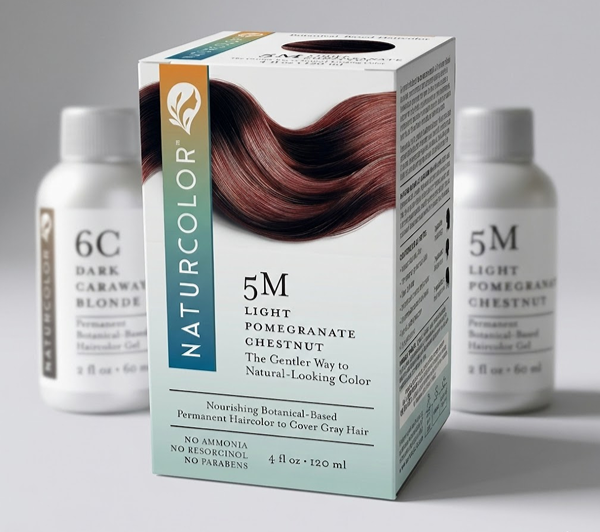
Why Choose Naturcolor?
Effective hair color shouldn't come at the cost of your hair's health. Discover why Naturcolor's botanically based, l...
read more

Ready for Hair that Looks Born, Not Bottled?
“This is a quality brand of hair color. It is gentle and easy to use. Doesn't contain the harsh chemicals of well known retail brands... No harsh smell.... very natural looking, not stark and fake like other brands that I've used. I even mix colors for a better color result. Leaves hair soft, not stiff. ”
 Barrett,
Verified Buyer
Barrett,
Verified Buyer
 Barrett,
Verified Buyer
Barrett,
Verified Buyer
No resorcinol or ammonia
Beautiful, natural-looking color guaranteed
Easy to maintain so you always look your best

